











Museo de Sitio de Toniná
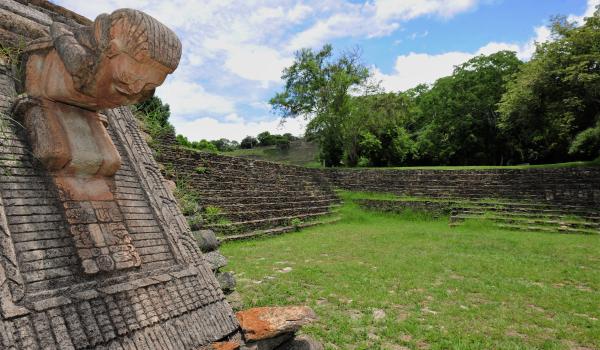
Extraordinary Maya city which grew to be the most populated and important city in Mesoamerica 1,500 years ago. Its magnificent pyramids (among the highest) with relief work, sculpture and pottery, as well as the museum's rich collection, amaze visitors to the archeological zone.
The Tonina Site Museum’s extensive archeological collection gives insight into the political and social life of the people, as well as everyday living. The display of artefacts from the Mayan settlement relate to both history and mythology, with a focus on the sacred text of the Popol Vuh. The aim is to promote awareness of the culture surrounding the Mayan creation myth. The museum was opened to the public in July 2000 by Ernesto Zedillo Ponce de León, who was president at the time.
A group of French archeologists, biologists, botanists and other similar specialists began work on the Tonina archeological site in 1972 and their main effort was to make cuts into the structure of what is now the main pyramid. In 1982 Juan Yadeun Angulo of the INAH was tasked with beginning excavation work, and he succeeded in recovering many high-value finds over several year’s hard work. Two warehouses were built in 1985, one on the location of the current archeological site entrance, barely 260 feet from the ballcourt, while the other was earmarked as the site museum.
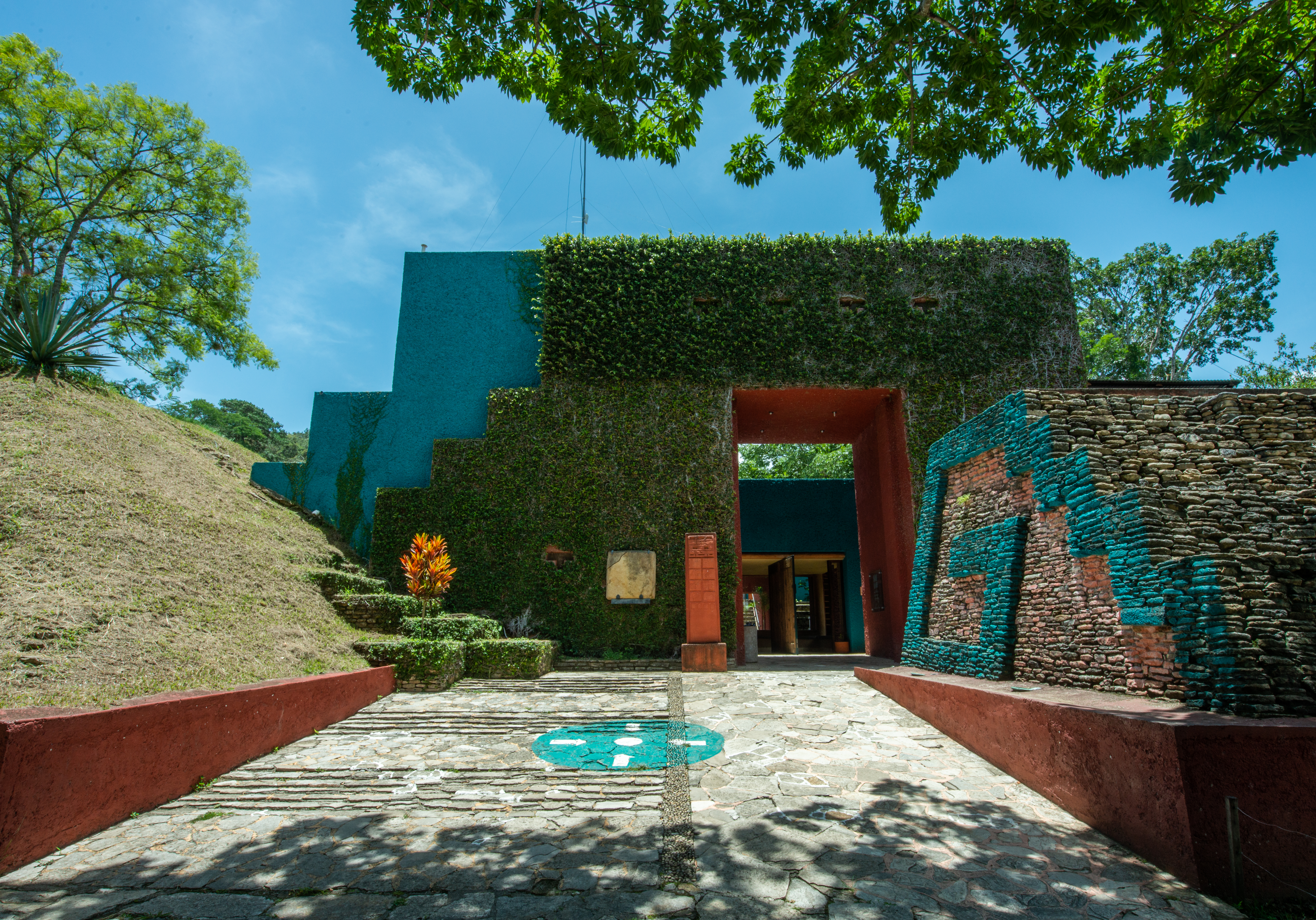
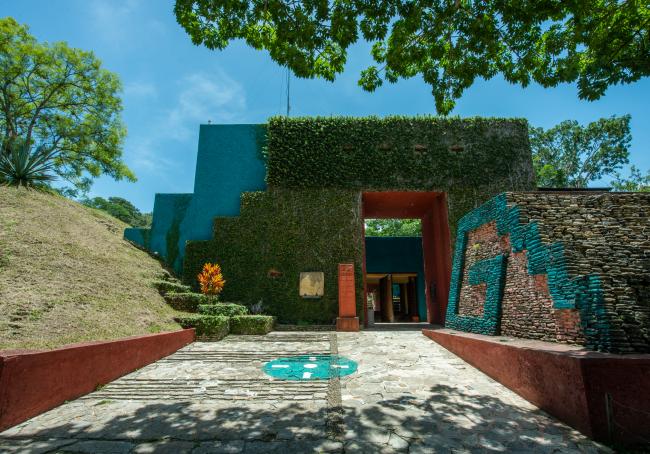
The museum space quickly became too small to receive the number of finds which kept arriving from the excavations, and in 1998 it became evident that a new building was needed. Zacatecas-born architect José Carlos Lozano was in charge of the design and construction, supported by the archeologist Yadeun Angulo, and the result of their partnership was to incorporate the majority of the elements of Mayan architecture into the museum design. One example is the “T” shaped windows in the building, a symbol representing Ik, the god of the wind. The building not only stores a vast collection of finds from over 30 years of excavations, but it is also a research center serving the community in general, especially through education.
The museum is in the middle of a rectangular esplanade, built to record the ancient Mesoamerican myth of the creation of the universe. The building has two exhibition galleries with material found on the archeological site, an auditorium for approximately 100 people screening a documentary about Tonina, an education services area and two office areas.
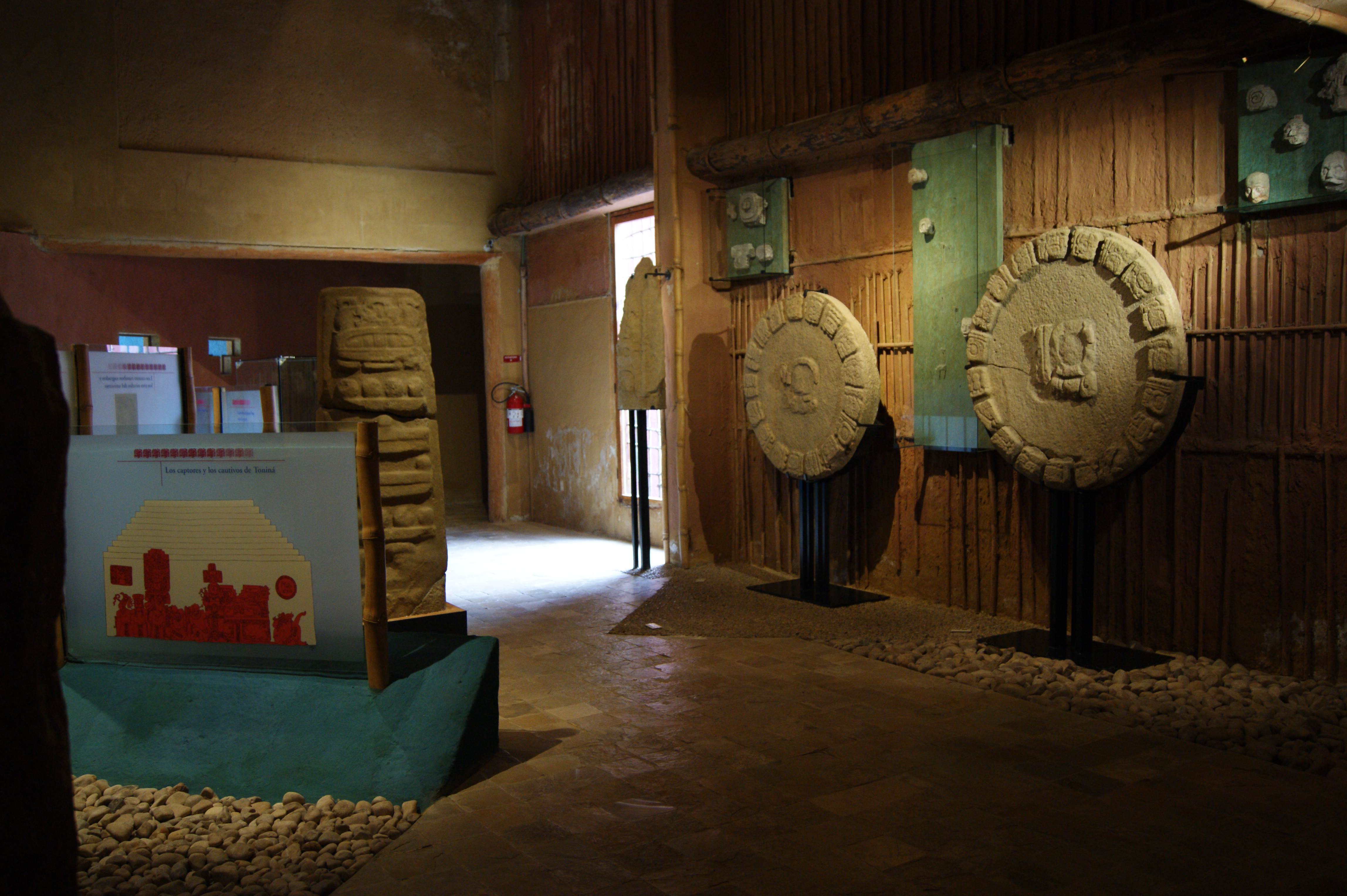
The gallery displays give visitors a sense of being transported back in time: going inside a pyramid, looking at its stepped roof made from reeds or wild cane, wood and bamboo, with wall decorations from reeds and clay surfacing, in addition to being able to view the exquisite cultural riches from the museum collections.
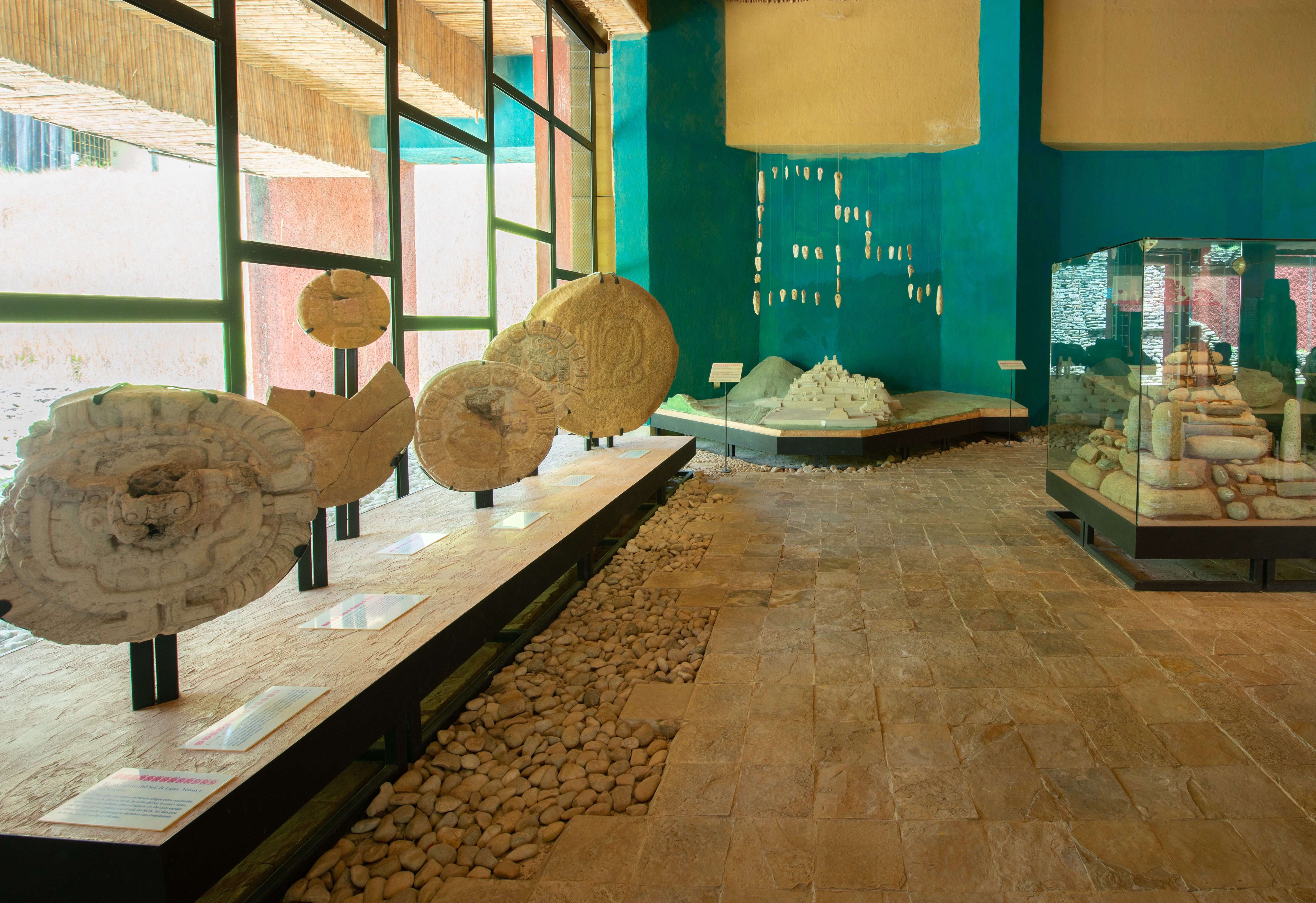
The museum entrance is located on the south side, where there is a stela designed by the archeologist Juan Yadeun Angulo, with the Mayan date 12 baktun, 19 katun, 7 tun, 0 uinal, 0 kin, which corresponds to July 13, 2000, the date the museum was opened. The archeological material on display is original, and all found at the site. The first gallery provides a representation of the underworld, which is why it is located on the lower level, and it is necessary to ascend 13 steps to reach the next gallery, where visitors can see offerings, sculptures of governors and commemorative discs with carved glyphs dedicated to the world above, to life and to the governors.
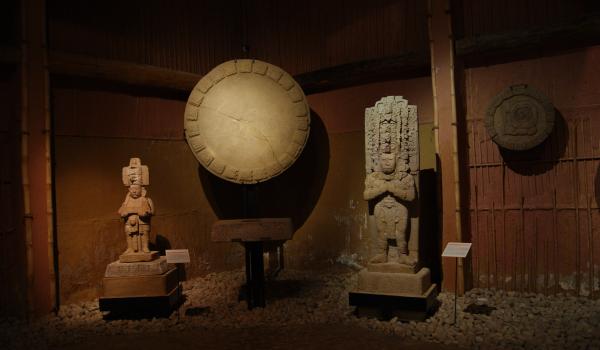
A or Red Room
This gallery represents the underworld, and is therefore located one level below the rest of the museum.
A or Red Room
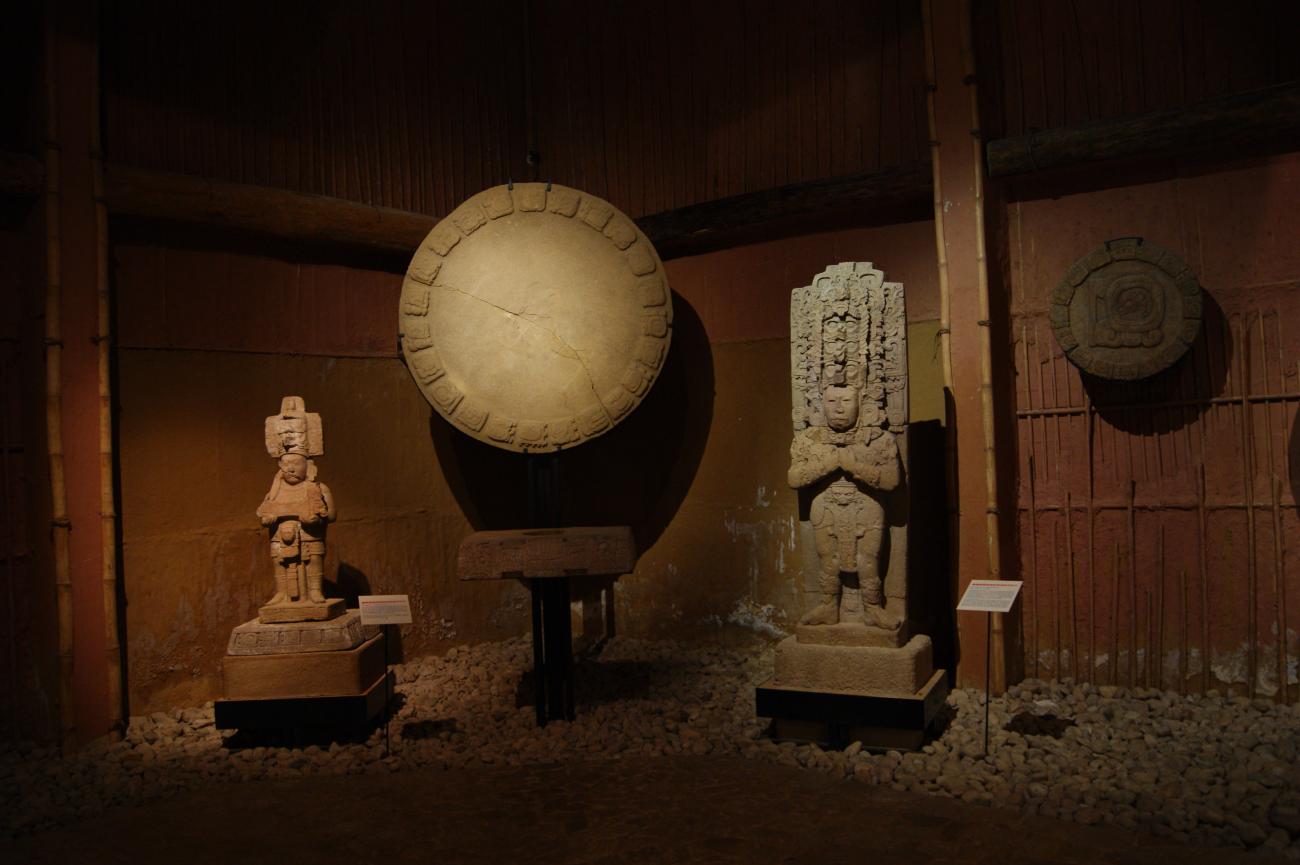
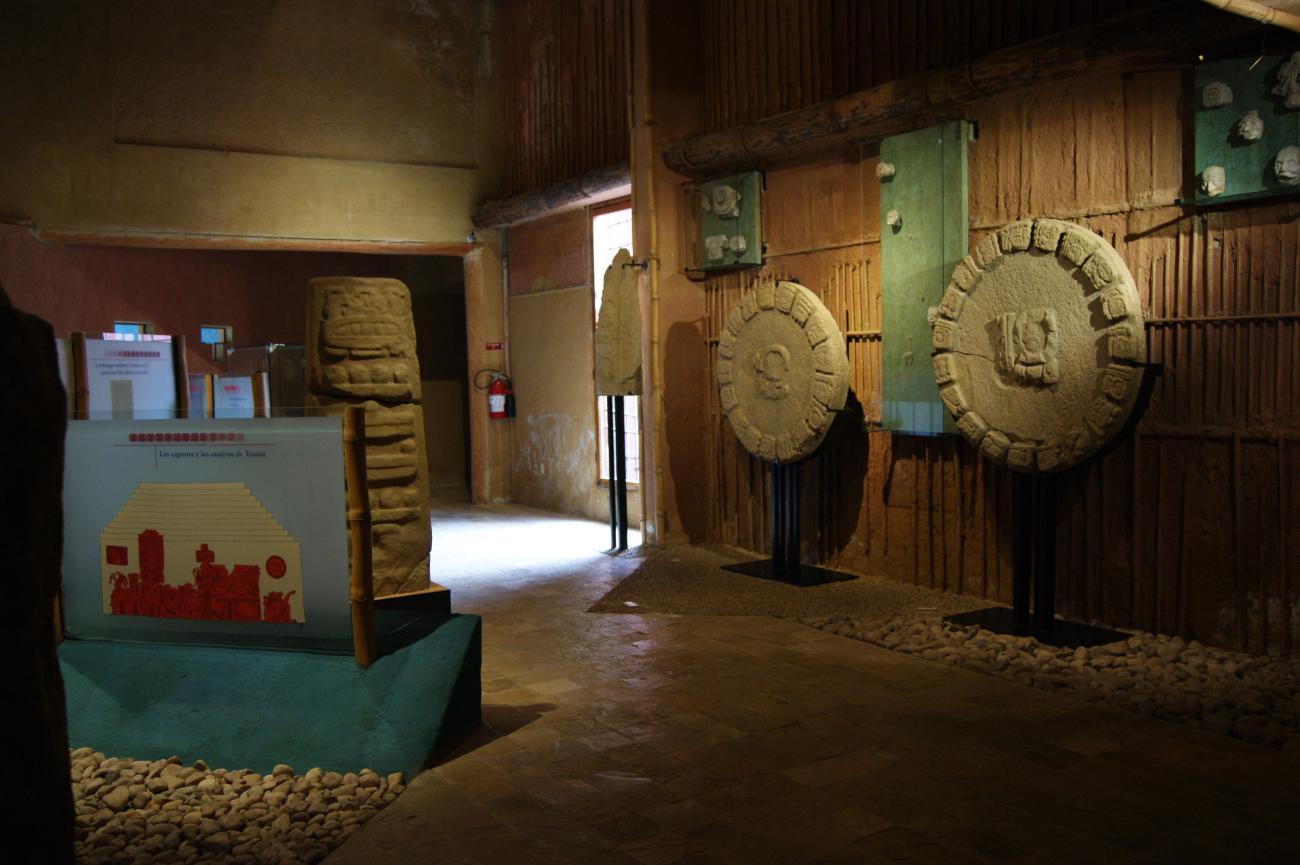
This gallery represents the underworld, and is therefore located one level below the rest of the museum.
The exhibition begins with the lid of a ceramic vessel featuring a depiction of the jaguar and cacao cobs, symbols associated with chocolate—a sacred drink with various uses. The jaguar was seen as the supreme lord of the earth. Its spotted coat symbolized the lights in the sky, making it a revered deity. Due to its ferocity and lethal power, it was also believed to rule the underworld. This ability to inhabit the underworld, earth, and sky was shared by the great Maya rulers.
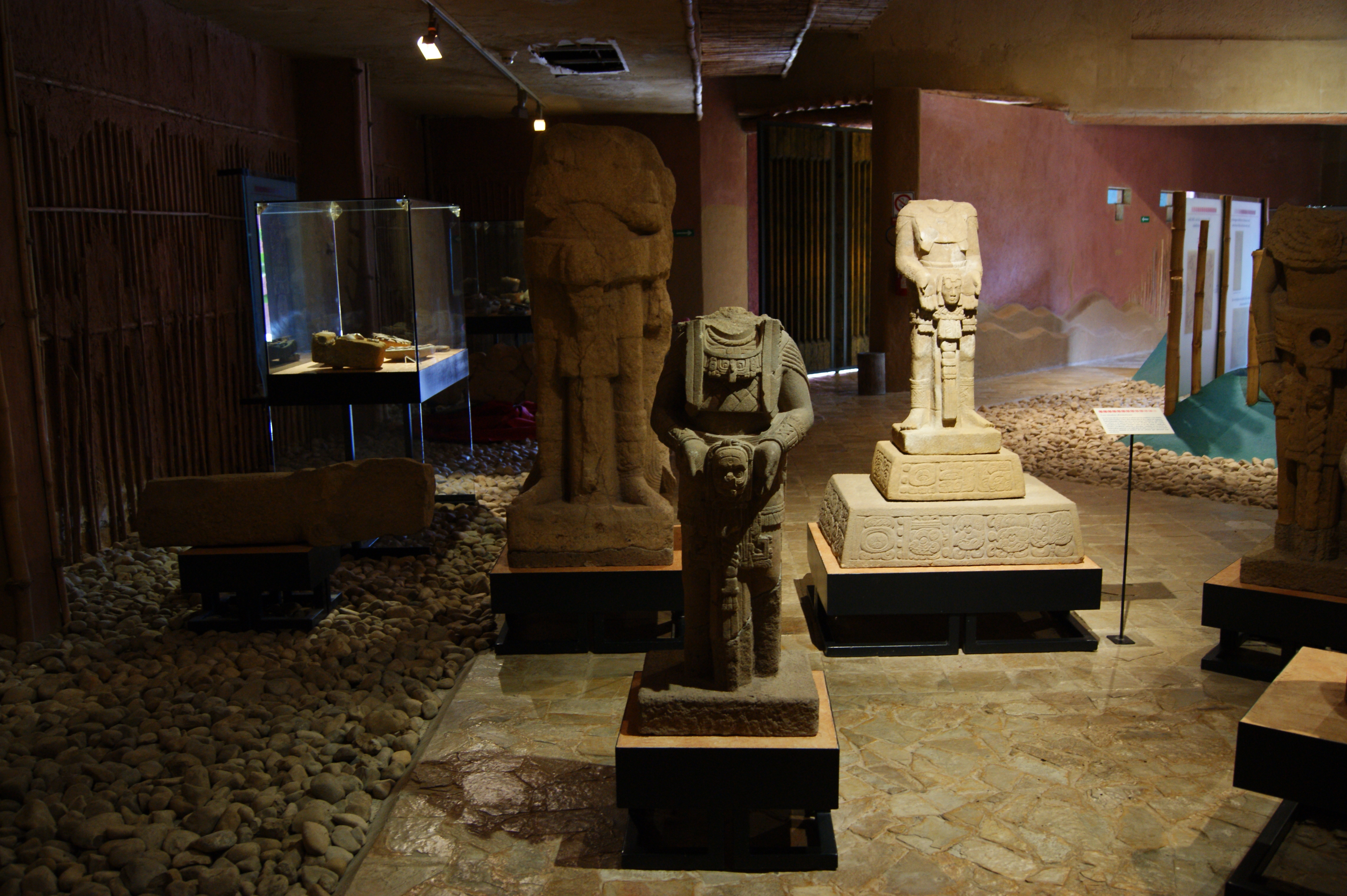
Facing the jaguar is a sculpture of Toniná’s earliest known ruler: the Lord of the Skull of the Water God, Lord of Poo, who marks the beginning of the dynastic record in 595 CE.
Accompanying these sculptures are inscriptions of two significant calendar dates: the first refers to the date of the third creation of the universe, corresponding to August 13, 3114 BCE in the Gregorian calendar, or 4 Ahau 8 Kumk’u in the Maya calendar. The second marks the end of Maya inscriptions in 909 CE, corresponding to 10 Baktun, 4 Katun, 0 Tun, 0 Uinal, 0 Kin. At the edges of this sculptural ensemble are representations of prisoners from Calakmul.
The second part of the gallery explains the complex pyramid structure of Toniná and its relationship to the thirteen calendar deities. Various ceramic vessels from both the Maya and Chenek cultures are also displayed.
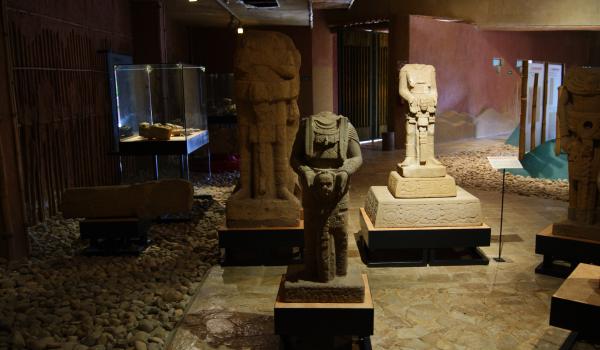
B or Blue Room
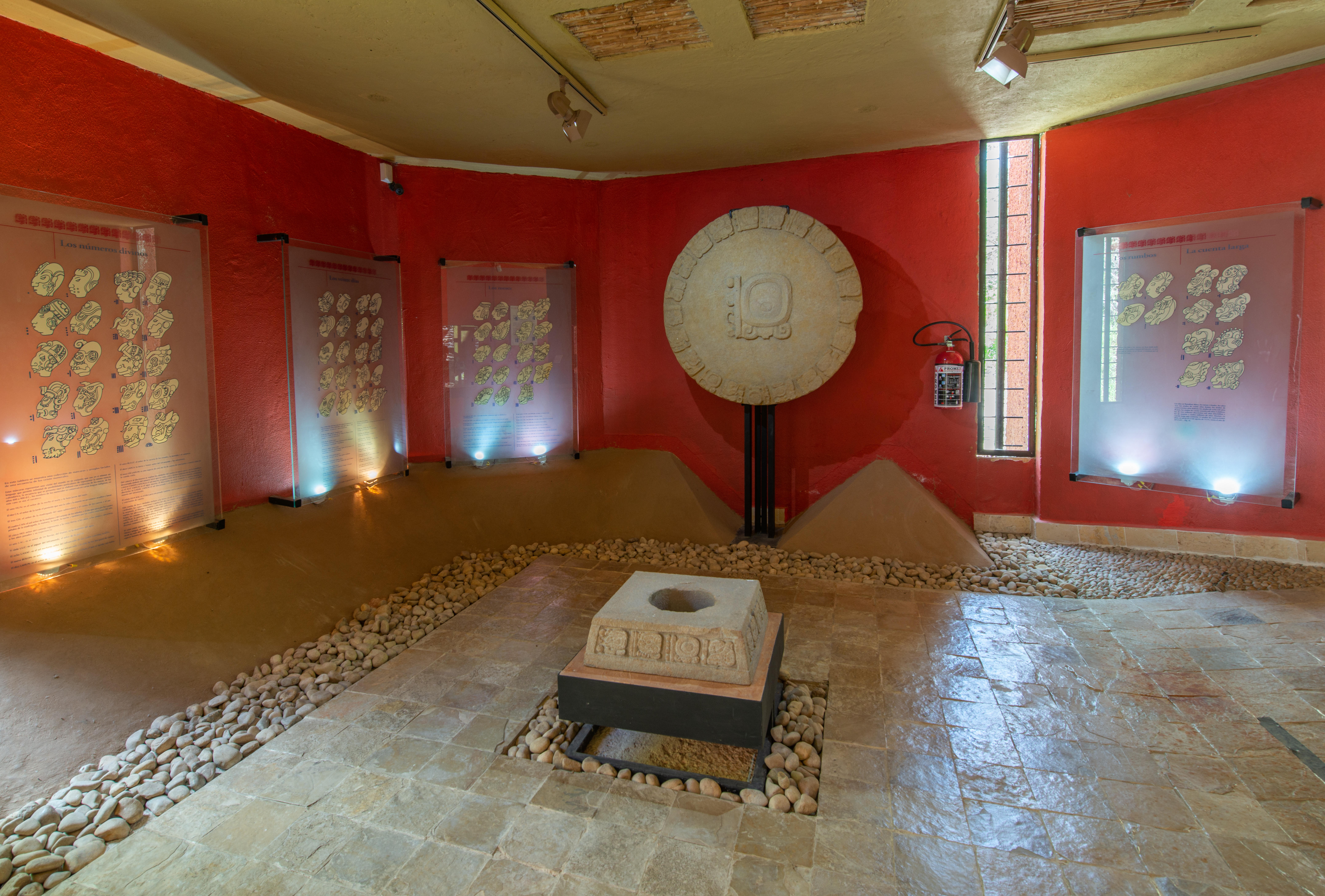
Located thirteen steps above Room A, this gallery is dedicated to the supramundane realm, life, and the rulers.
B or Blue Room
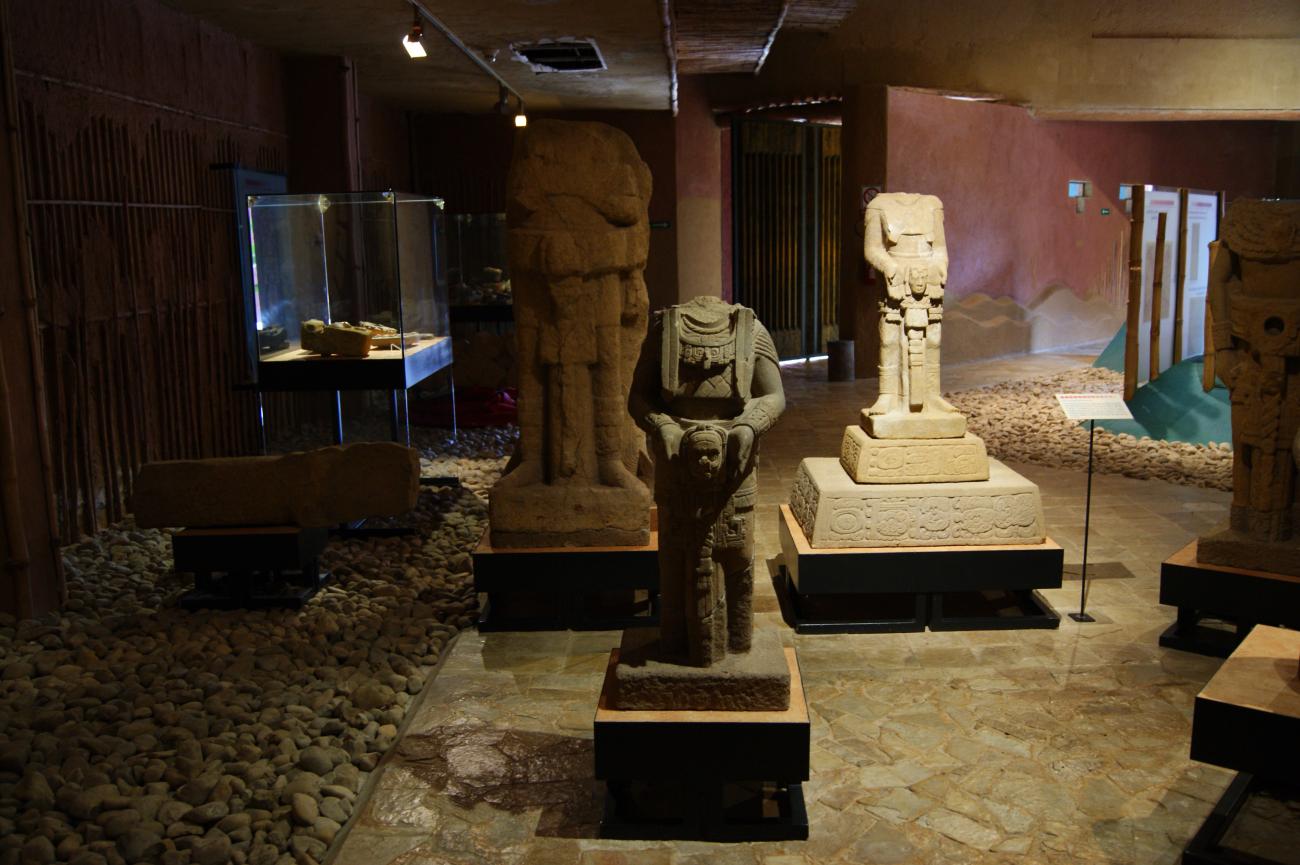
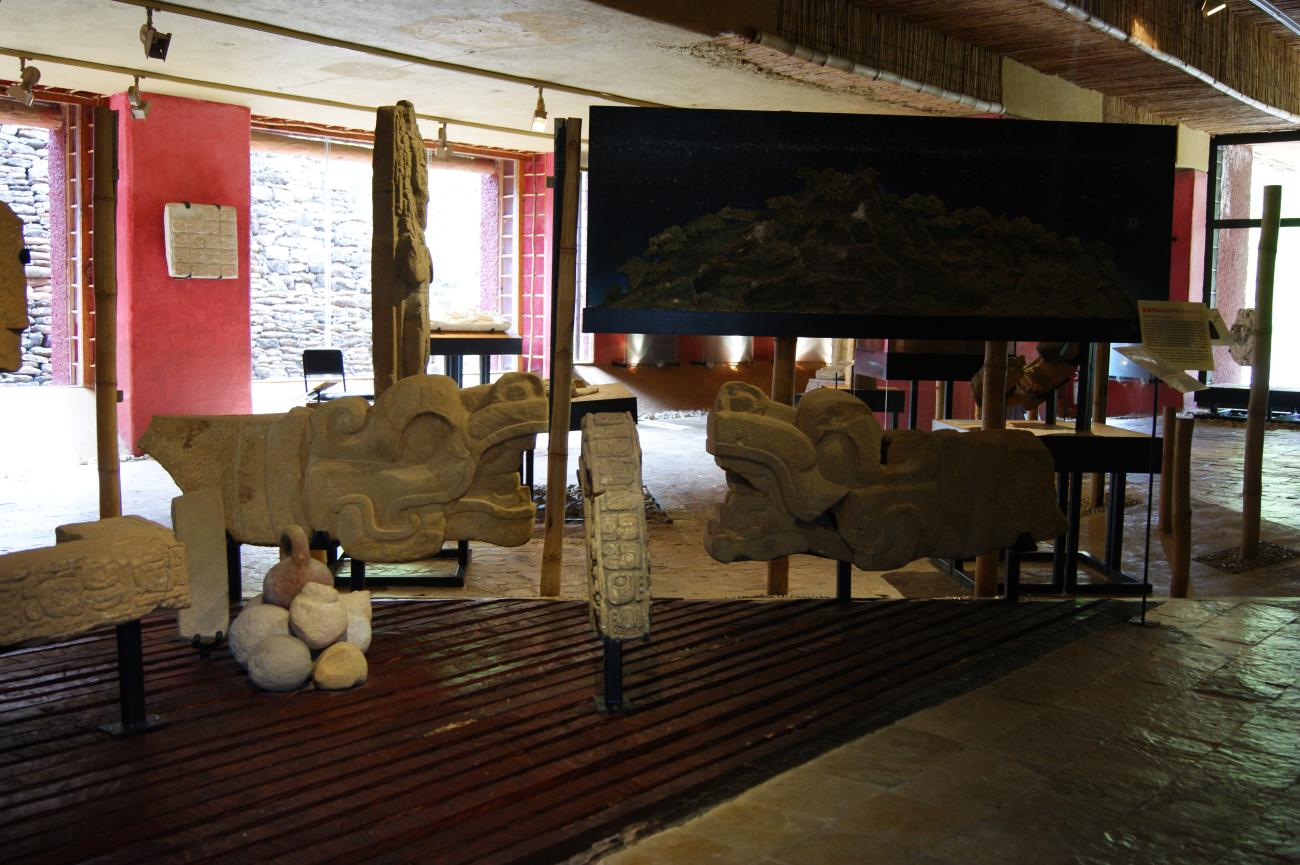
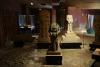
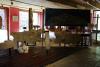
Located thirteen steps above Room A, this gallery is dedicated to the supramundane realm, life, and the rulers.
It replicates the stepped design of the previous room, creating the sense that the exhibition takes place within a seven-tiered pyramid, a sacred space where deceased lords, gods, and celestial lights come together.
Three display cases showcase tools and materials acquired through trade with various pre-Hispanic peoples. One section features thirteen sculptures of rulers, each one ritually decapitated by the Chenek. This arrangement portrays a grand scene of power transition, with a staff of command at the center—the ultimate symbol of authority, adorned with fantastic masks of gods from the underworld, sky, and earth, as well as the celestial twins, the sun and moon, all bound by a deadly little serpent, the nauyaca.
Document
- EncargadoRutilo Antonio Rodríguez Castroantonio_rodriguez@inah.gob.mx+52 (961) 612 28 24